
Posters

Printed,
not posted

Campaign sheets made to go up on a wall. Shown whole here — the full sheet, its own credit, and the sources it cites, none of it cropped away.

10 sheets

No Plastic, with GIZ

Ten A3 sheets on single-use plastic: what it is, where it ends up, what it does to a body, who is responsible for it, and what to carry instead.

10 sheets, as printed

Printed on every sheet: implemented by GIZ, on behalf of the Federal Ministry for the Environment, Nature Conservation and Nuclear Safety of the Federal Republic of Germany, in partnership with Swechha.
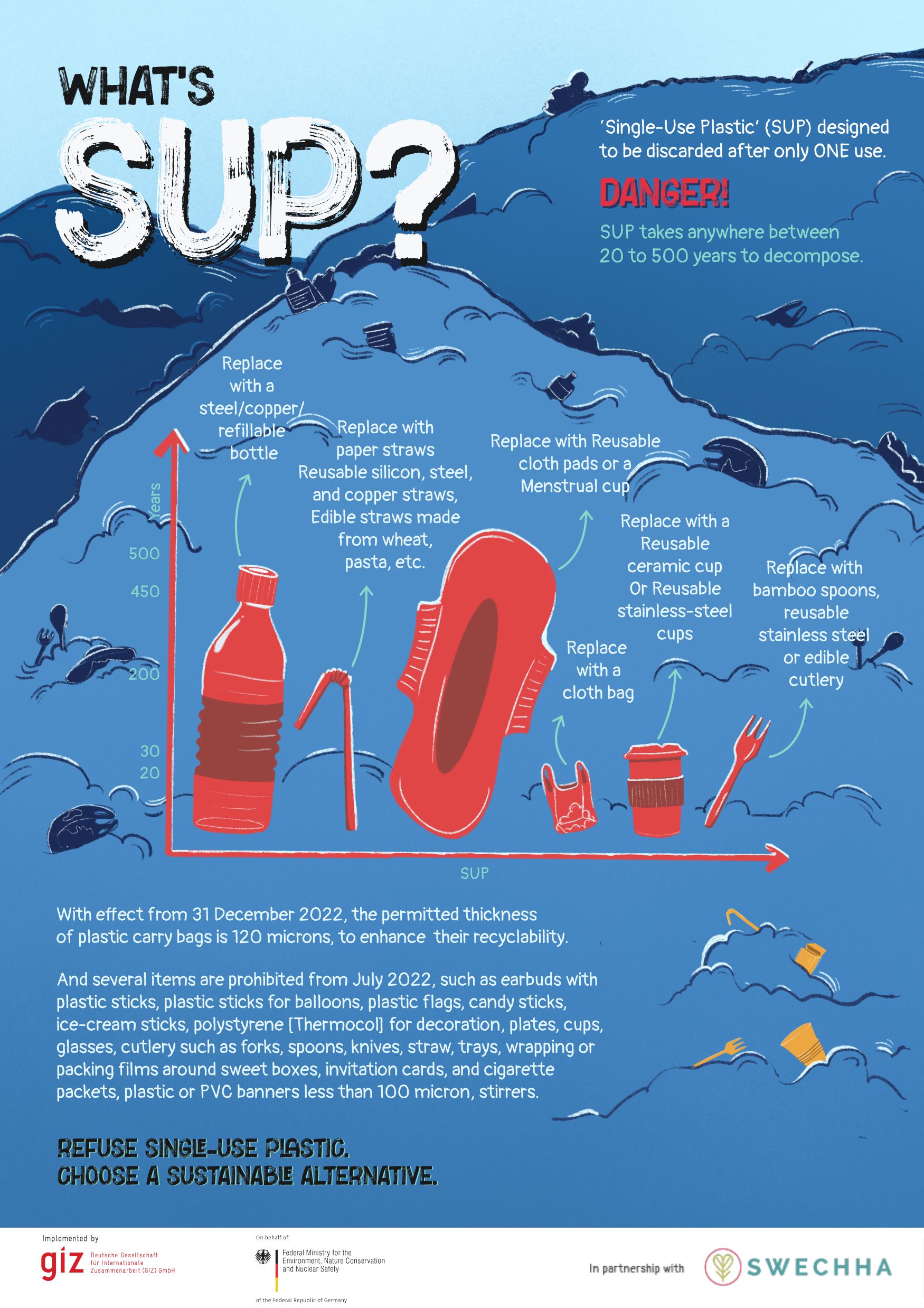
Poster defining single-use plastic as designed to be discarded after one use, with a chart giving each item 20 to 500 years to decompose and a replacement named beside it, over an ocean of floating litter

What’s SUP?

Defines the term, then puts a decomposition span against a bottle, a straw, a pad, a bag, a cup and a fork.
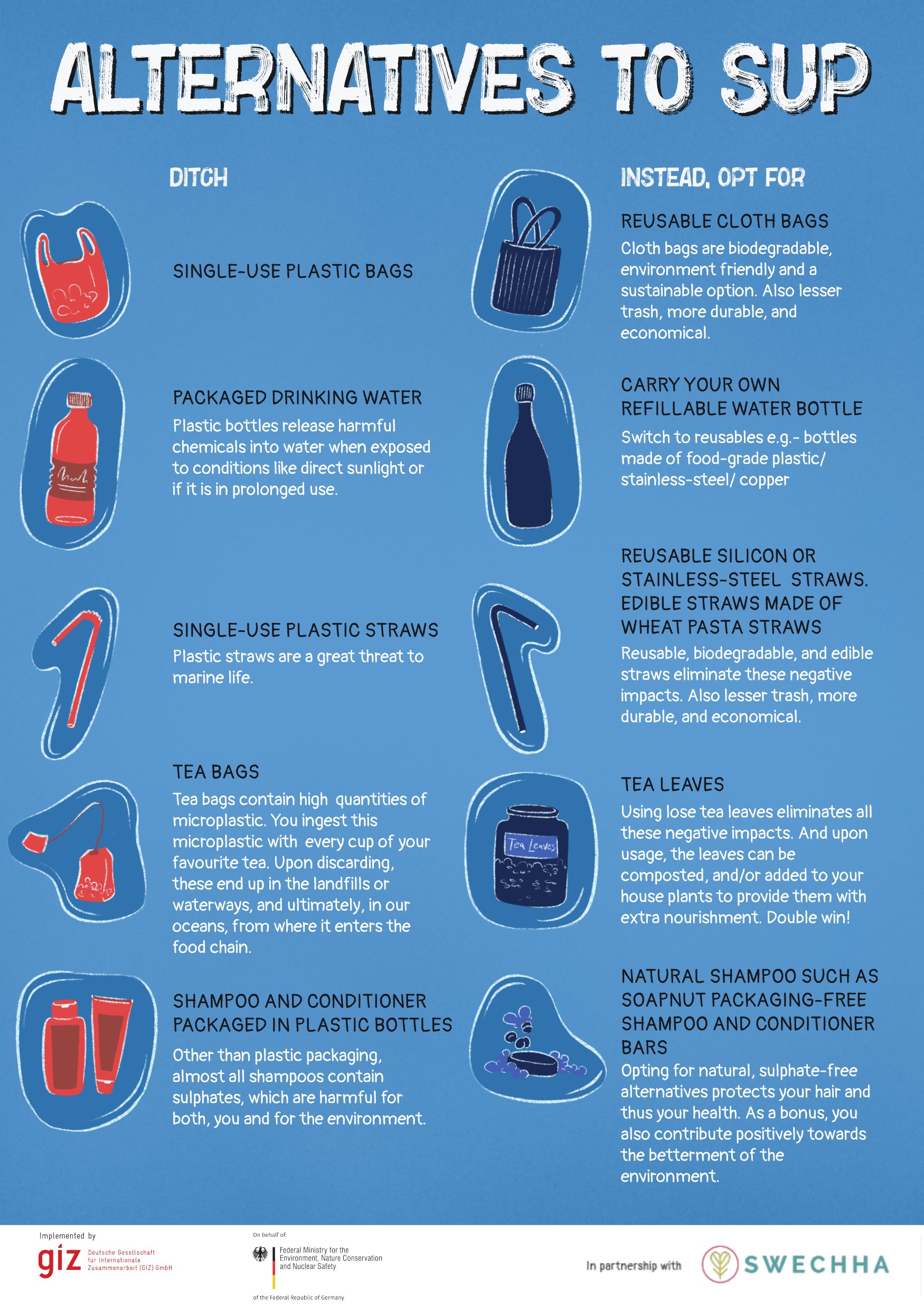
Two-column poster pairing six single-use items — plastic bags, packaged water, straws, tea bags, shampoo bottles — with a named reusable or package-free replacement for each

Alternatives to SUP

Six things to ditch in one column and what to carry instead in the other. Tea bags are on it, which surprises most people.
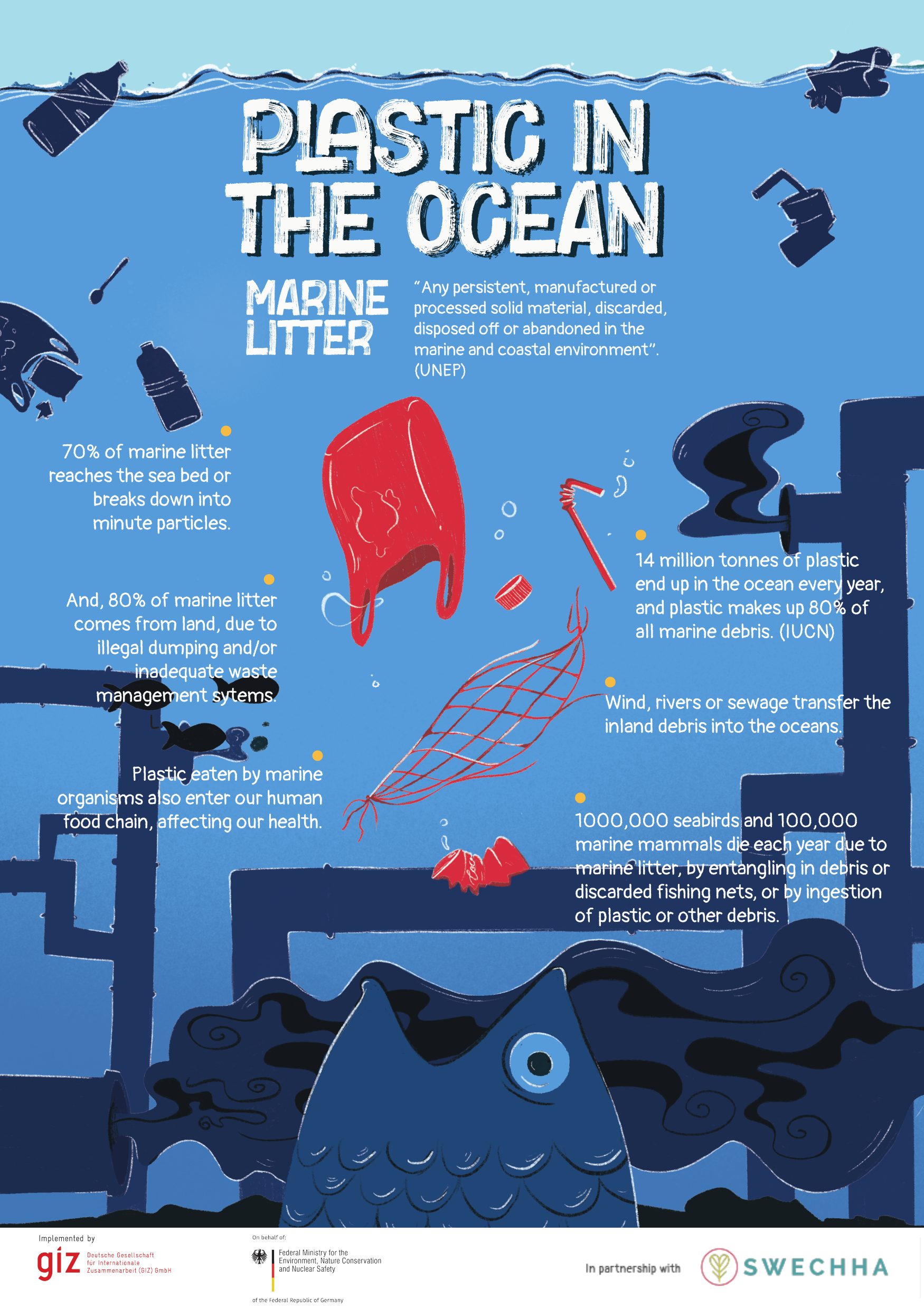
Poster on marine litter citing UNEP and IUCN: 14 million tonnes of plastic entering the ocean each year, 80% of it from land, 70% reaching the sea bed, and a million seabirds killed annually

Plastic in the Ocean

Marine litter defined by UNEP, and the finding that most of it never went near the sea: 80% comes off land.
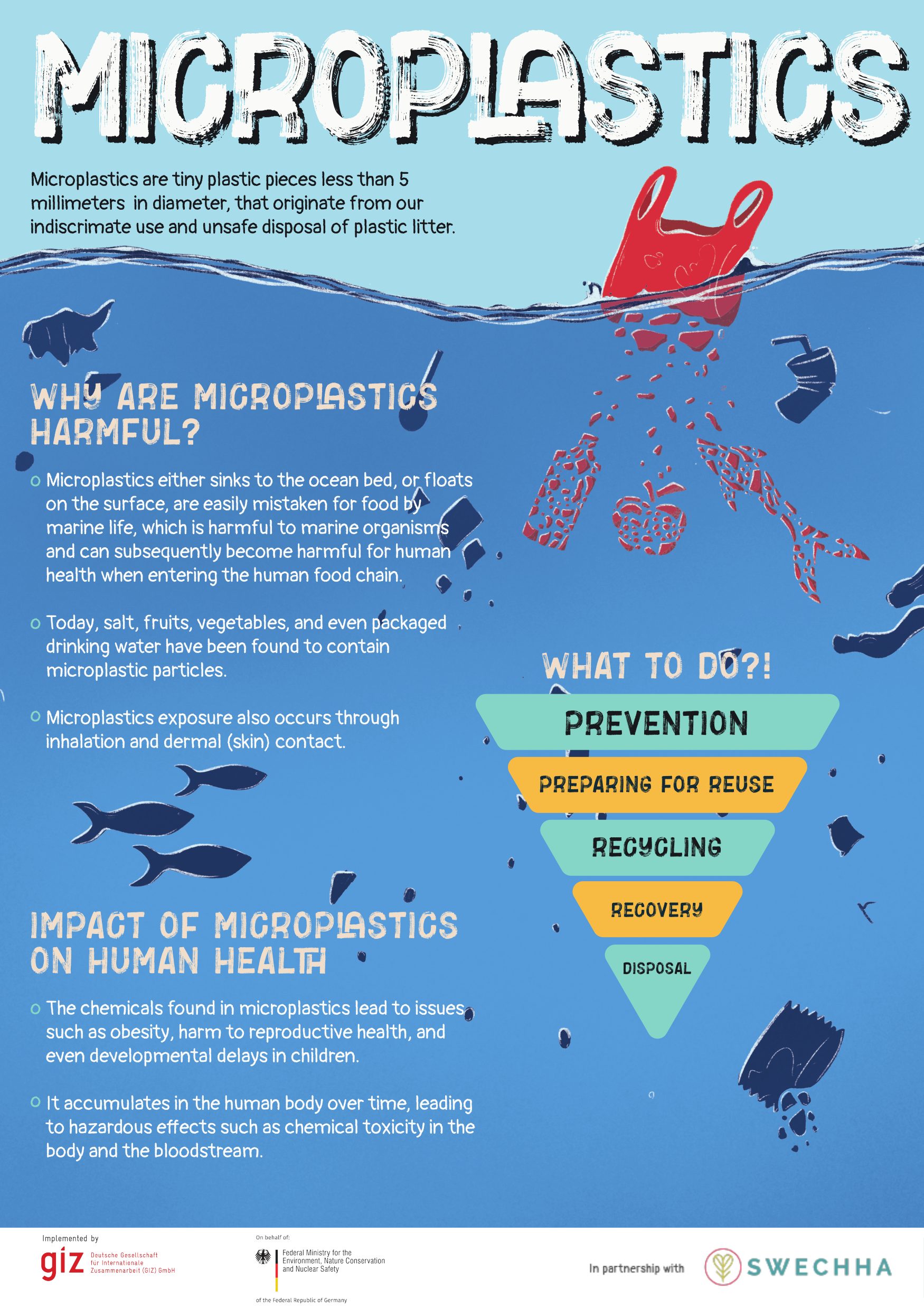
Poster explaining microplastics as plastic fragments under five millimetres, their route into salt, fruit, vegetables and packaged water, and an inverted pyramid ranking prevention above reuse, recycling, recovery and disposal

Microplastics

What happens after the litter breaks up, and the waste hierarchy that answers it — prevention first, disposal last.
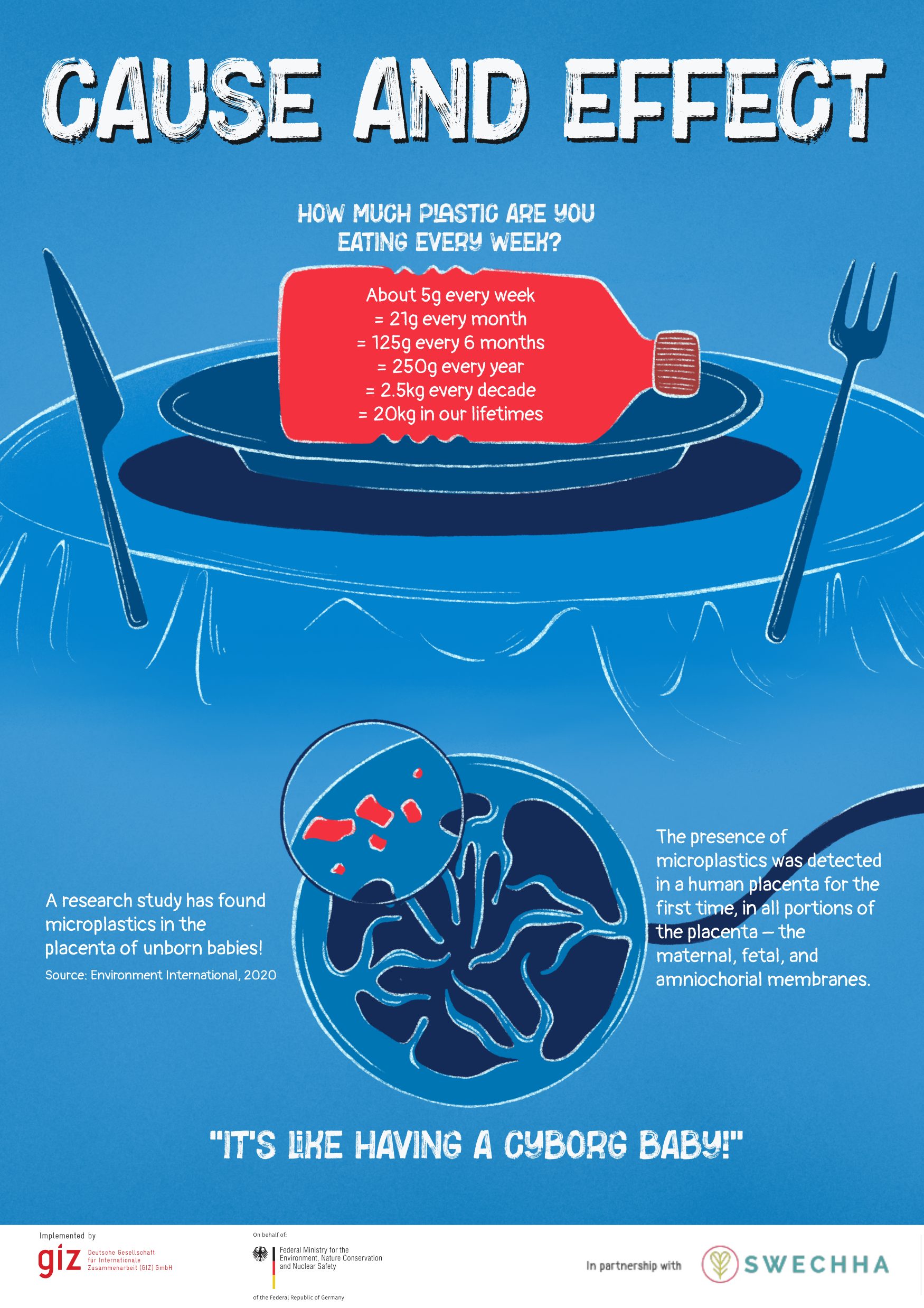
Poster showing plastic served on a dinner plate, scaling roughly five grams eaten weekly up to twenty kilograms in a lifetime, beside a 2020 finding of microplastics in a human placenta

Cause and Effect

The sheet that stops people: about 5g of plastic eaten a week, and microplastics found in a human placenta.
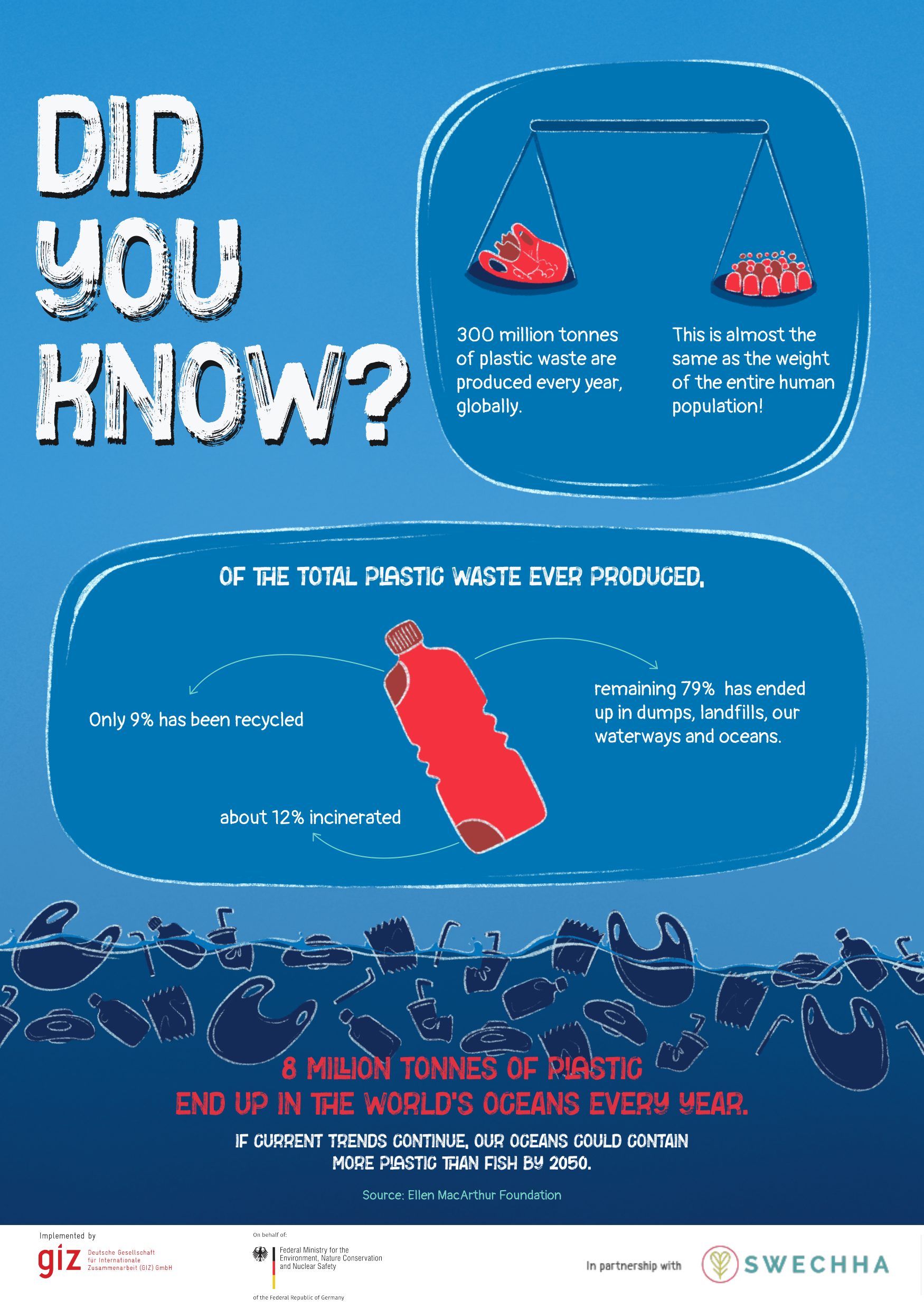
Poster weighing annual plastic production against the weight of the human population, and splitting all plastic ever made into 9% recycled, 12% incinerated and 79% left in dumps, landfills and waterways

Did You Know?

Where all the plastic ever made actually went. Nine per cent of it was recycled.
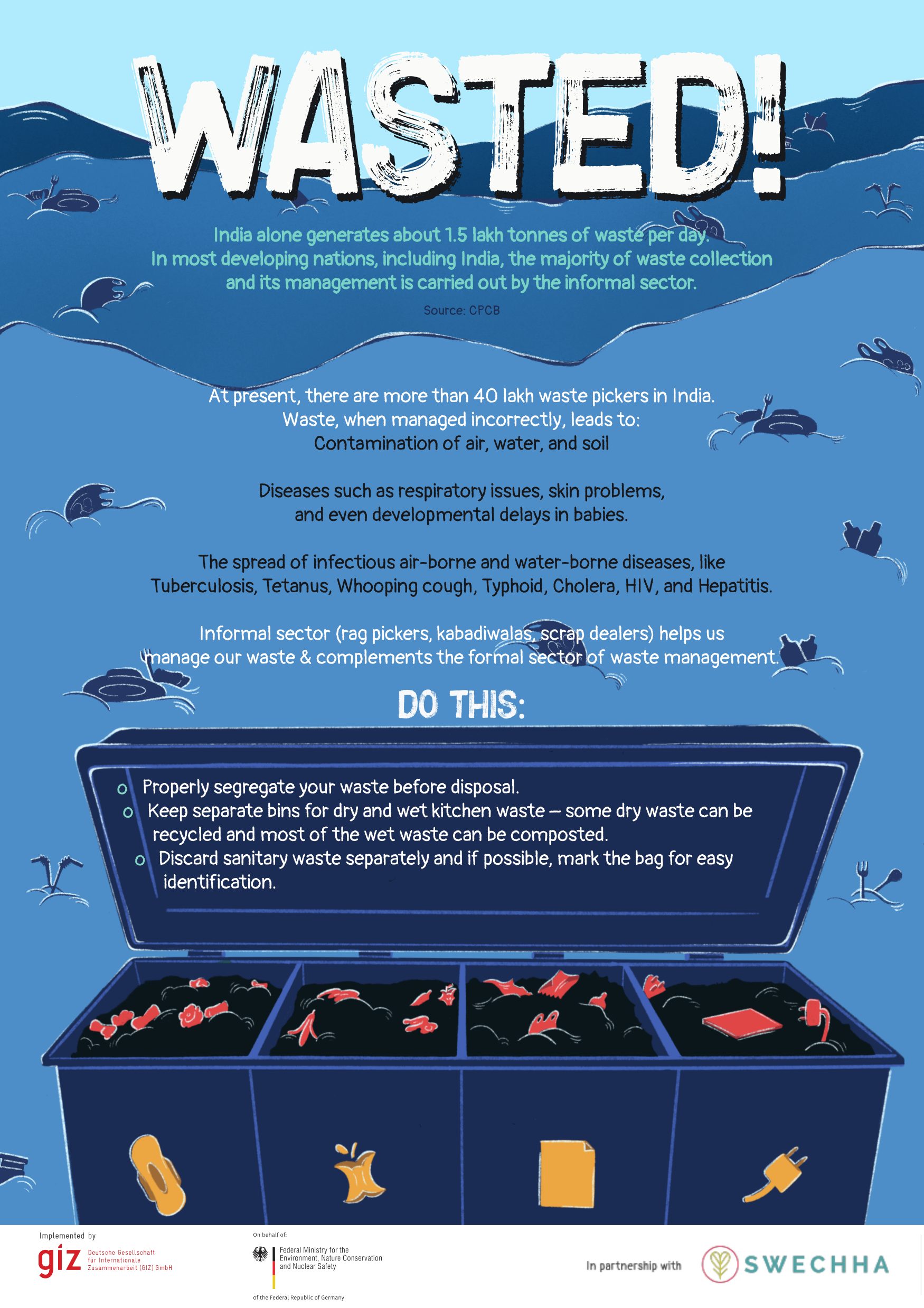
Poster citing CPCB on India generating about 1.5 lakh tonnes of waste a day, naming the more than 40 lakh waste pickers who handle it and the diseases carried by unsegregated waste, above an open four-bin segregation unit

Wasted!

The only sheet about people rather than material: the informal sector that handles India’s waste, and what unsegregated waste does to them.
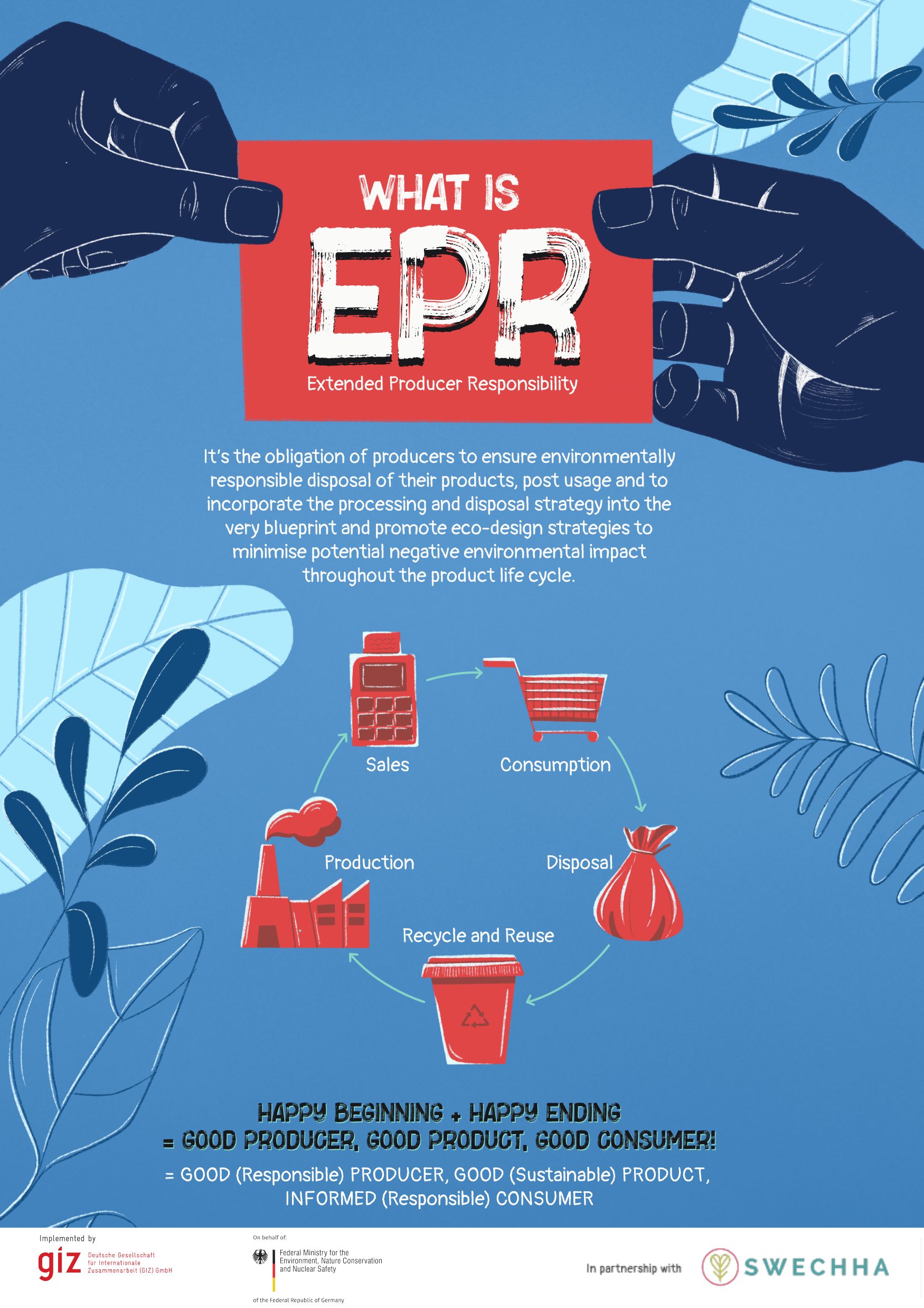
Poster defining Extended Producer Responsibility as the producer’s obligation for disposal and eco-design, drawn as a loop through production, sales, consumption, disposal and recycling

What is EPR?

The one sheet that does not address the shopper. Extended producer responsibility puts the obligation back on whoever made the thing.
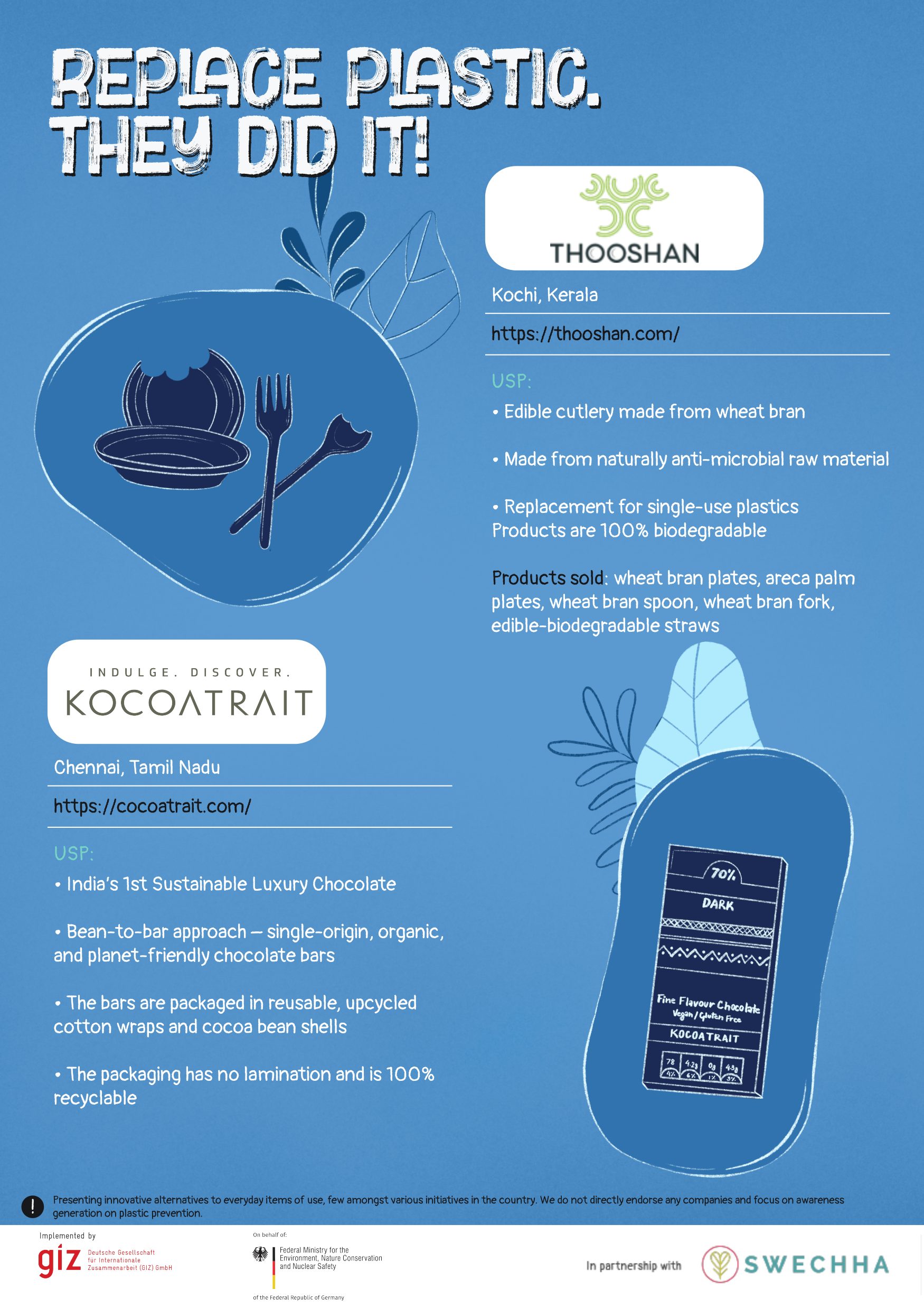
Poster profiling two Indian enterprises replacing single-use plastic — one making edible cutlery and plates from wheat bran, one a chocolate maker packaging in upcycled cotton and cocoa bean shells

Replace Plastic. They Did It! (1 of 2)

Two Indian businesses selling everyday things without single-use plastic, with what they sell and how it is packed.
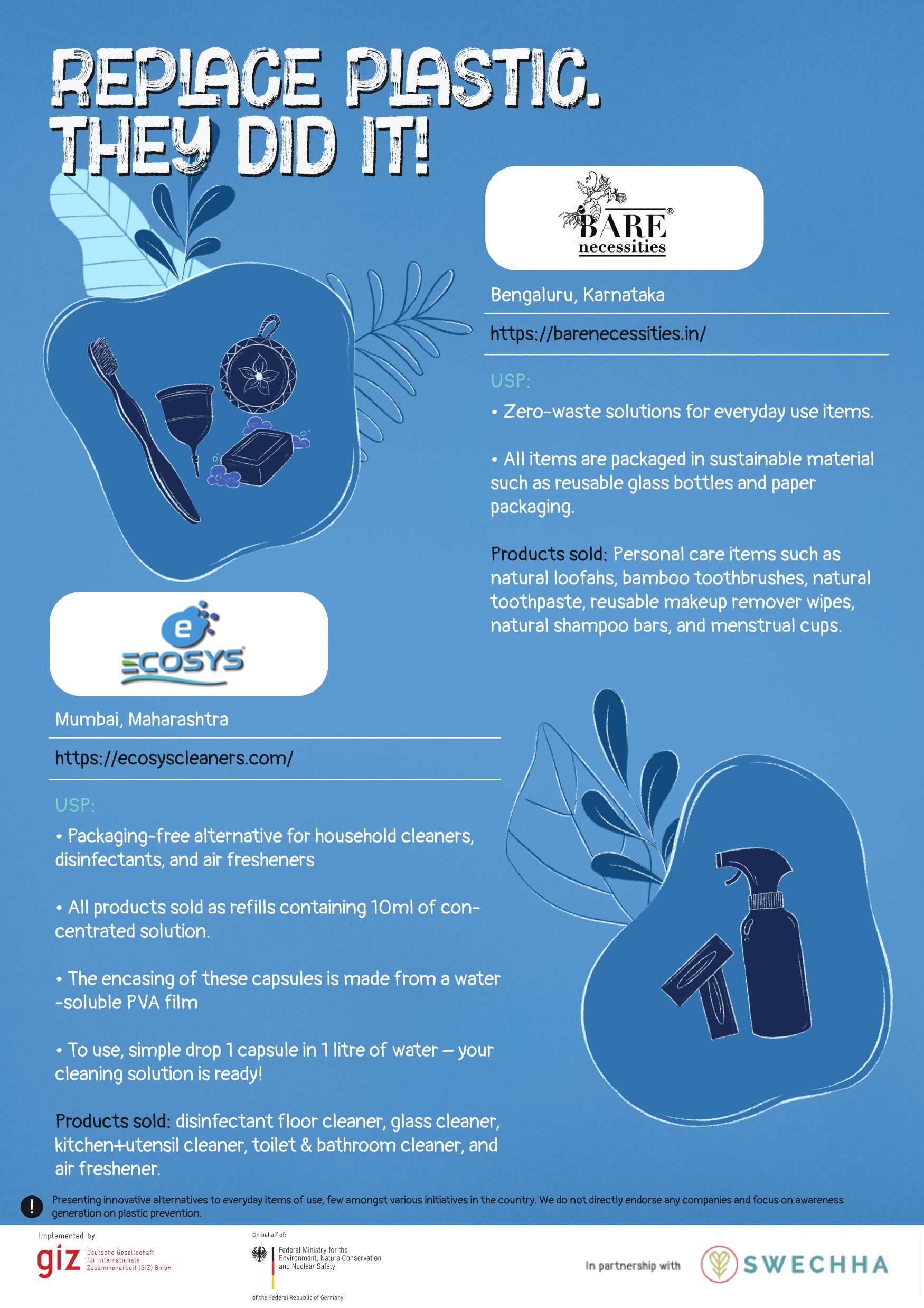
Poster profiling two more Indian enterprises — one selling zero-waste personal care packaged in glass and paper, one selling cleaning concentrates as capsules in a water-soluble film

Replace Plastic. They Did It! (2 of 2)

Two more, on household goods and cleaning — the categories where single-use packaging is hardest to avoid.

The two sheets that name companies carry their own qualification, printed: “Presenting innovative alternatives to everyday items of use, few amongst various initiatives in the country. We do not directly endorse any companies and focus on awareness generation on plastic prevention.” That still holds here.

The campaign behind them

What is not here

One series is not an archive, and the gaps are worth stating rather than leaving a reader to assume this is everything.

[object Object]

[object Object]

Put a set up

The sheets were made to be printed. If you have a wall — a school corridor, an office, a shopfront — that is the ask.