
No Plastic
Two words, and no ambiguity about what is being asked. What the campaign left behind is the argument itself: ten A3 sheets on single-use plastic, marine litter, microplastics and who is responsible for a thing after it is thrown away.
What we do
Ten printed sheets against single-use plastic, made with GIZ.
No Plastic is a demand, and the demand is the name. What we hold of the campaign is the argument itself, printed: ten A3 sheets that set out what single-use plastic is, where it ends up, what it does on the way, and what to carry instead of it.
The sheets were made with GIZ in 2022, on the commission of the German federal environment ministry. They work through the problem in order. What the term means, and how long each item lasts once it is thrown away. Where marine litter comes from, and the finding that most of it never went near the sea. What happens once plastic has broken into pieces small enough to eat. Who is obliged to deal with a product after somebody has finished using it.
Two of the ten do the opposite of the other eight. Instead of asking a reader to refuse something, they name four Indian businesses already selling everyday things without it — cutlery, chocolate, soap, floor cleaner. The line the set closes on is an instruction rather than a slogan: refuse single-use plastic, choose a sustainable alternative. It is the nearest this campaign comes to a demand with a method attached to it.
The posters
All ten, as printed.
No Plastic, the full set
Printed on every sheet: implemented by GIZ, on behalf of the Federal Ministry for the Environment, Nature Conservation and Nuclear Safety of the Federal Republic of Germany, in partnership with Swechha.
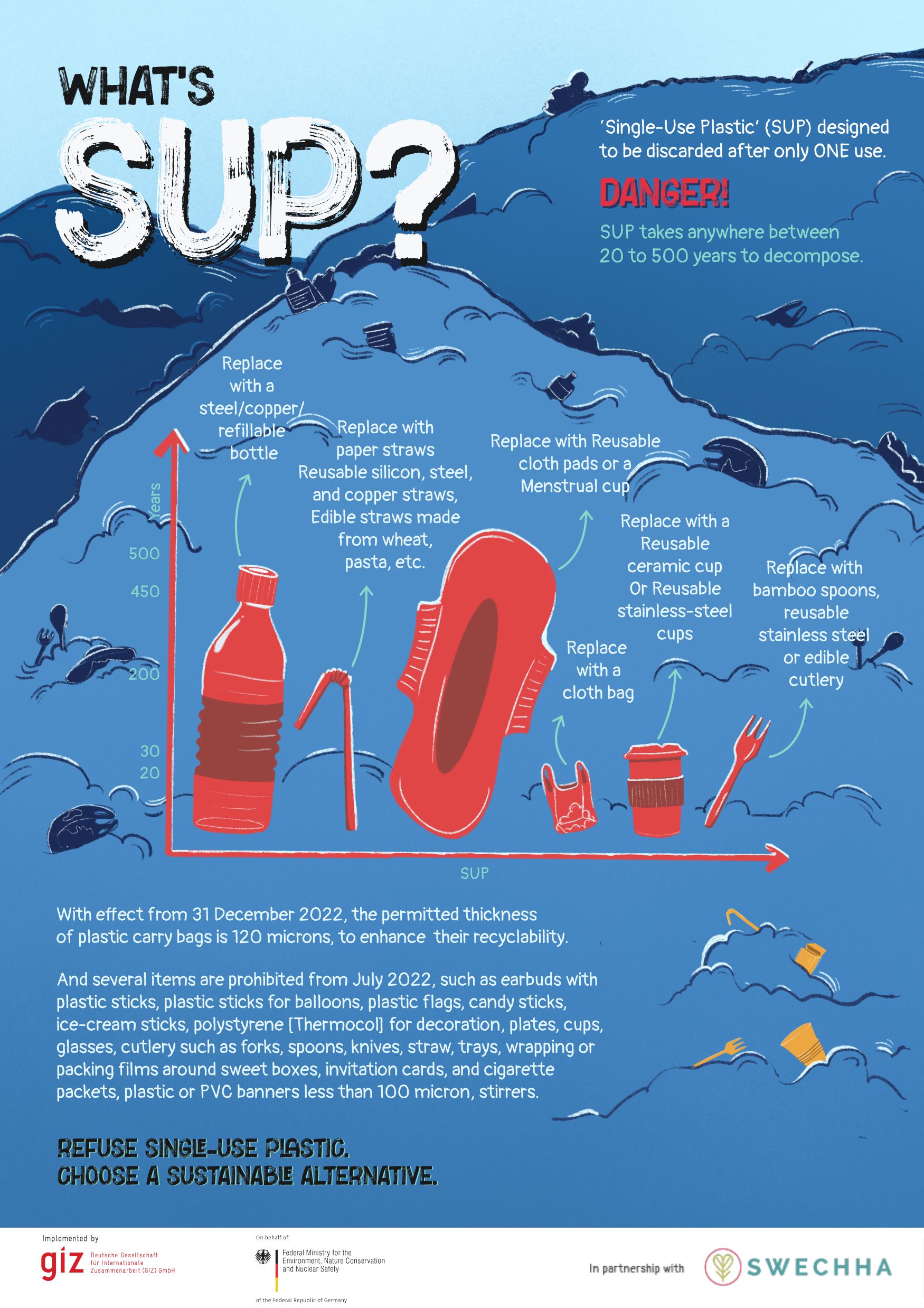
What’s SUP?
Defines the term, then puts a decomposition span against a bottle, a straw, a pad, a bag, a cup and a fork.
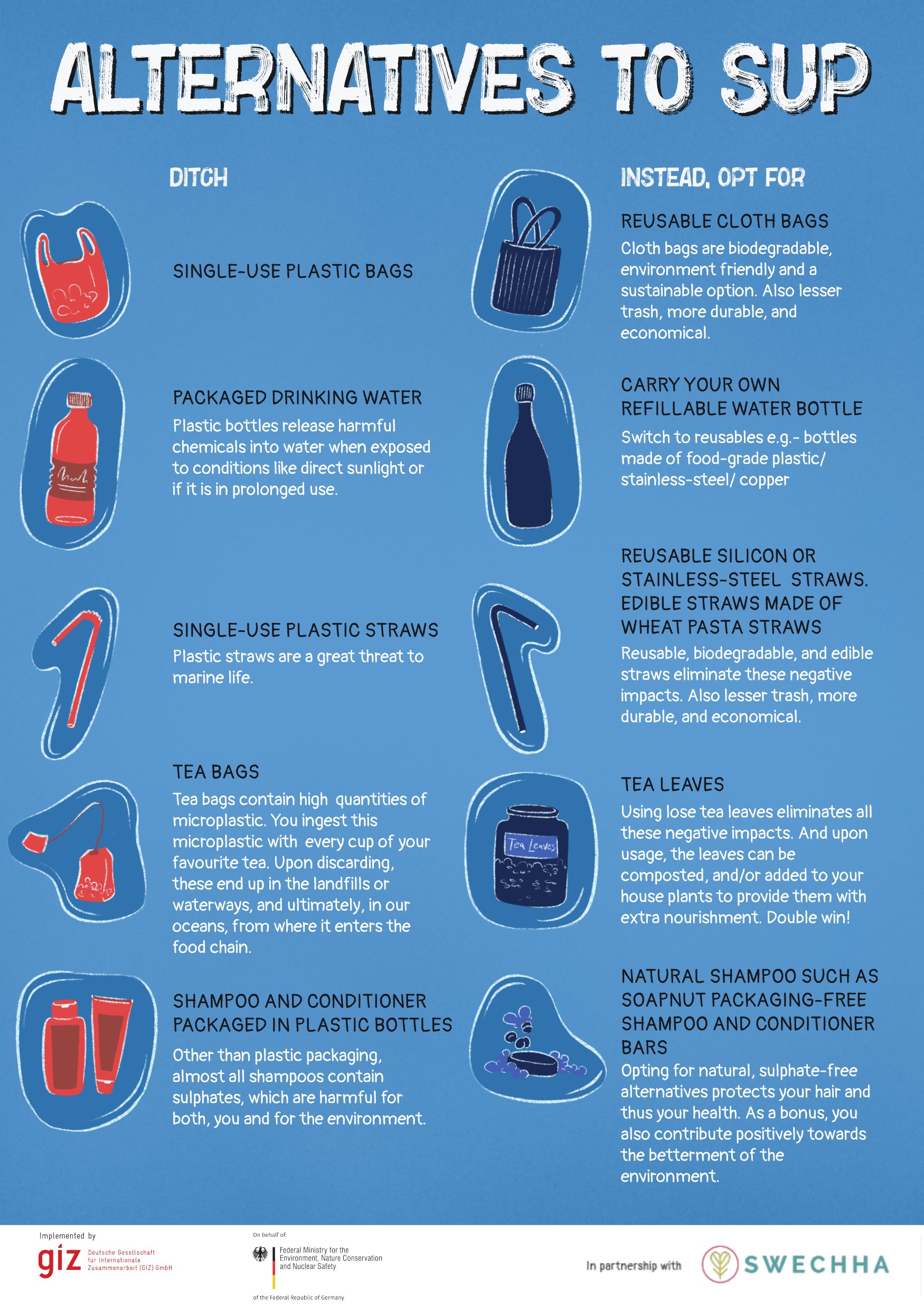
Alternatives to SUP
Six things to ditch in one column and what to carry instead in the other. Tea bags are on it, which surprises most people.
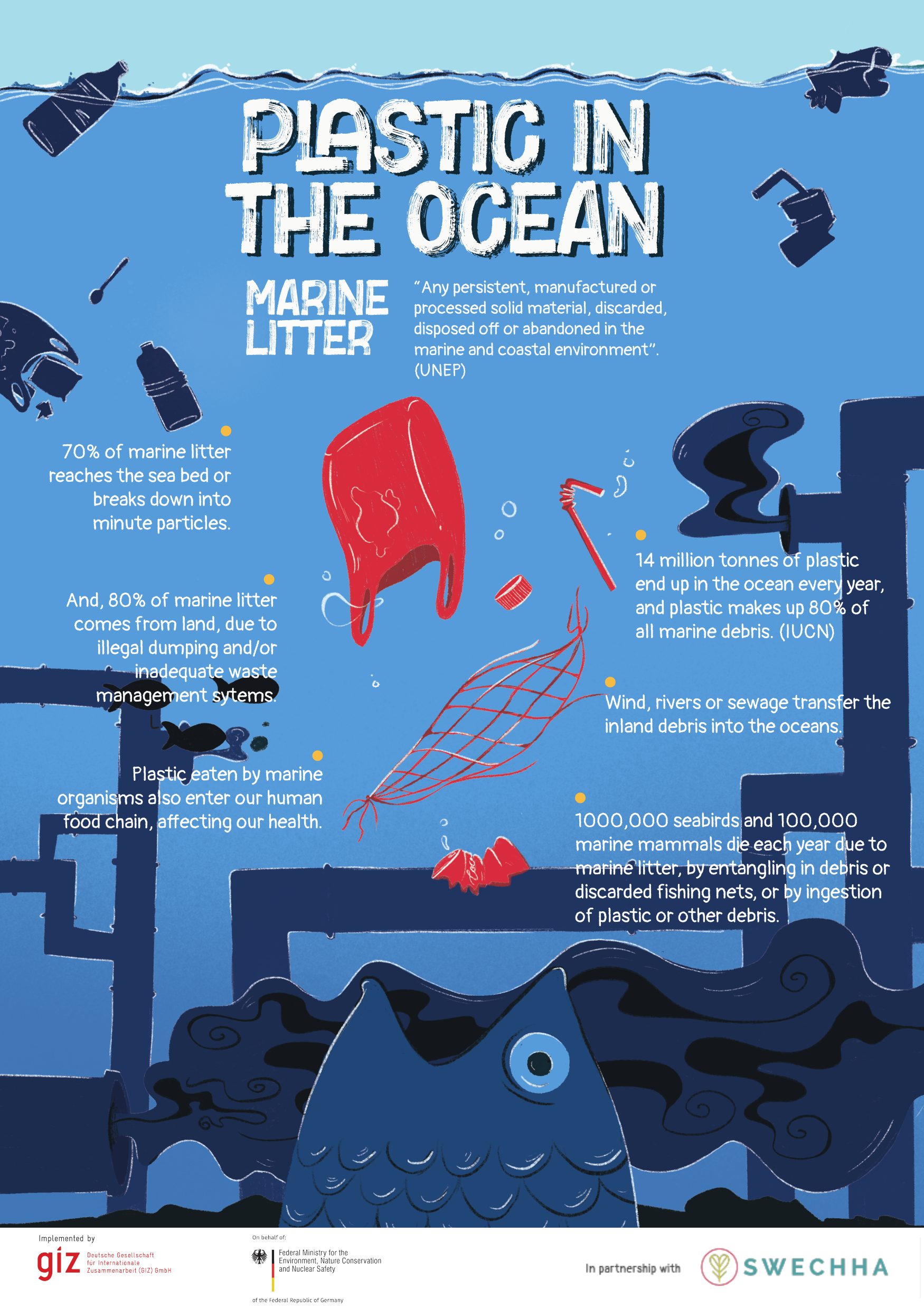
Plastic in the Ocean
Marine litter defined by UNEP, and the finding that most of it never went near the sea: 80% comes off land.
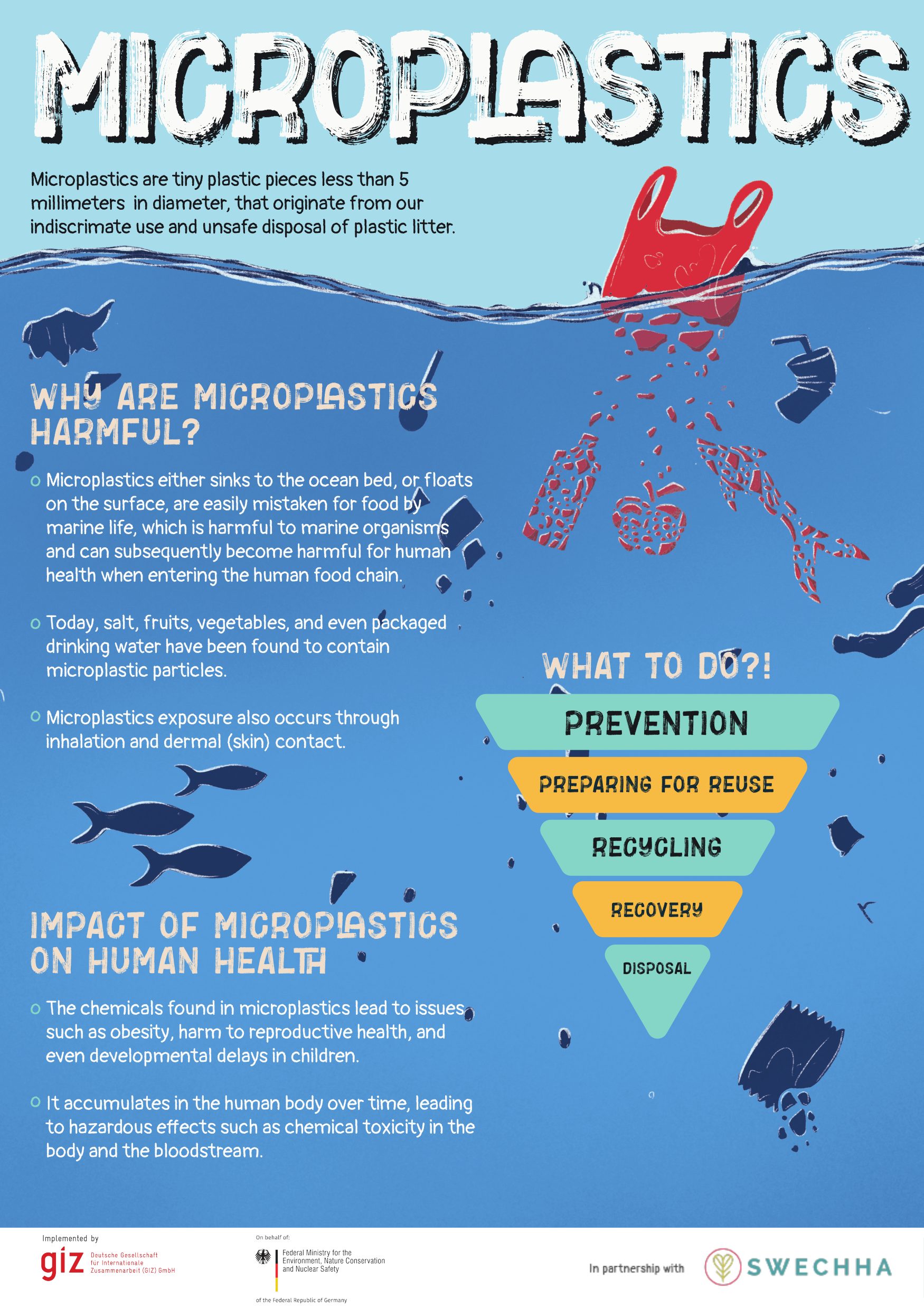
Microplastics
What happens after the litter breaks up, and the waste hierarchy that answers it — prevention first, disposal last.
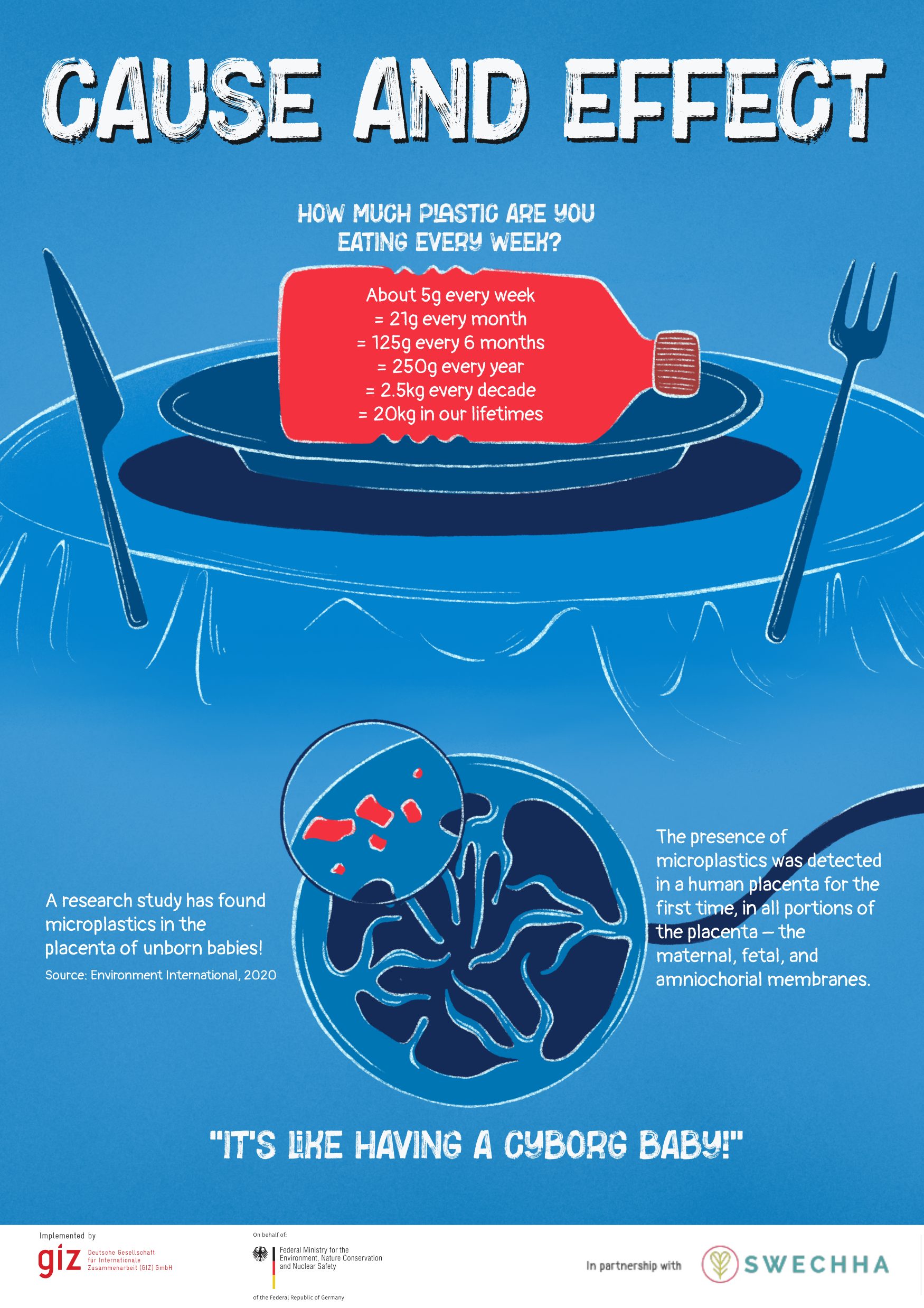
Cause and Effect
The sheet that stops people: about 5g of plastic eaten a week, and microplastics found in a human placenta.
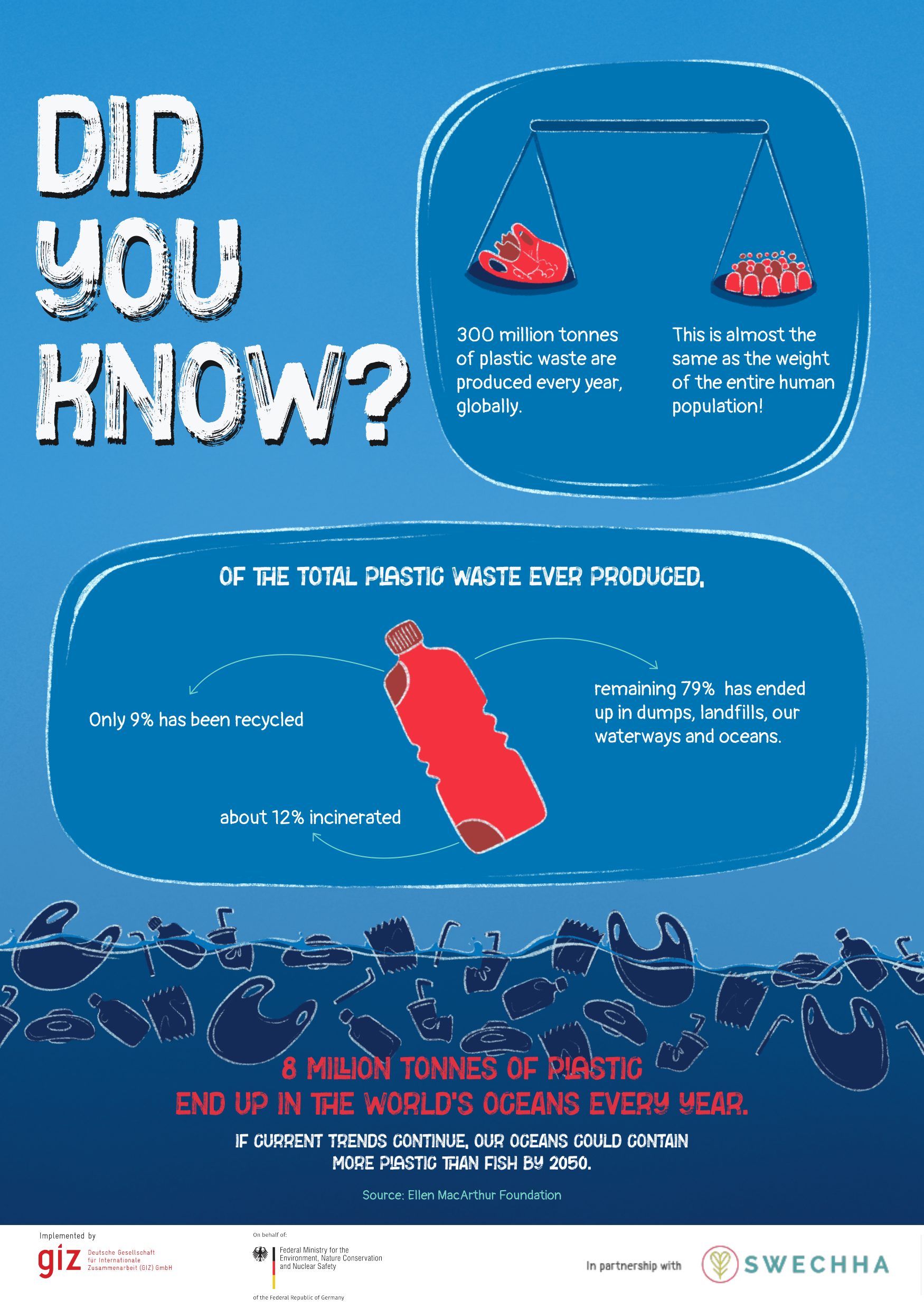
Did You Know?
Where all the plastic ever made actually went. Nine per cent of it was recycled.
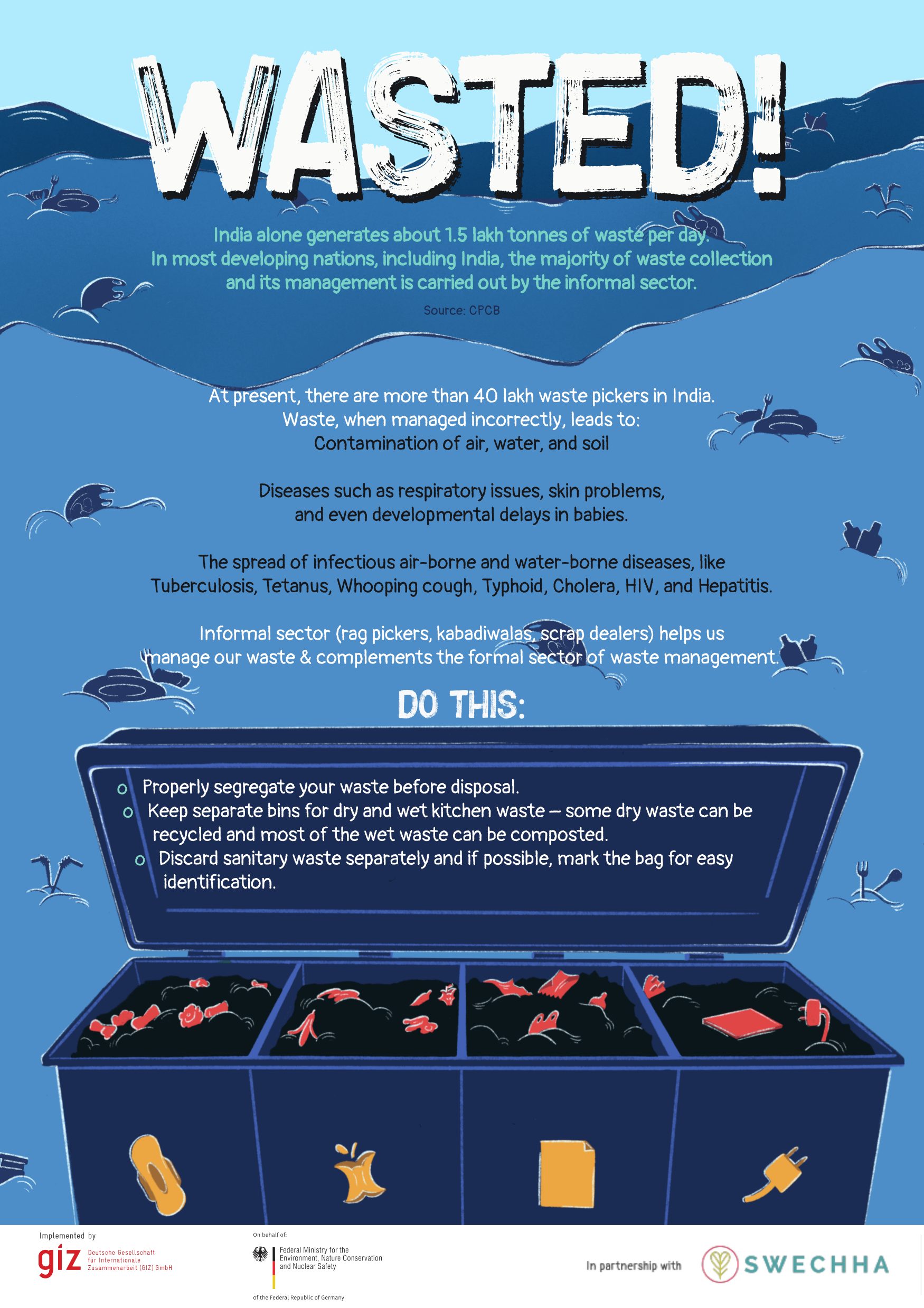
Wasted!
The only sheet about people rather than material: the informal sector that handles India’s waste, and what unsegregated waste does to them.
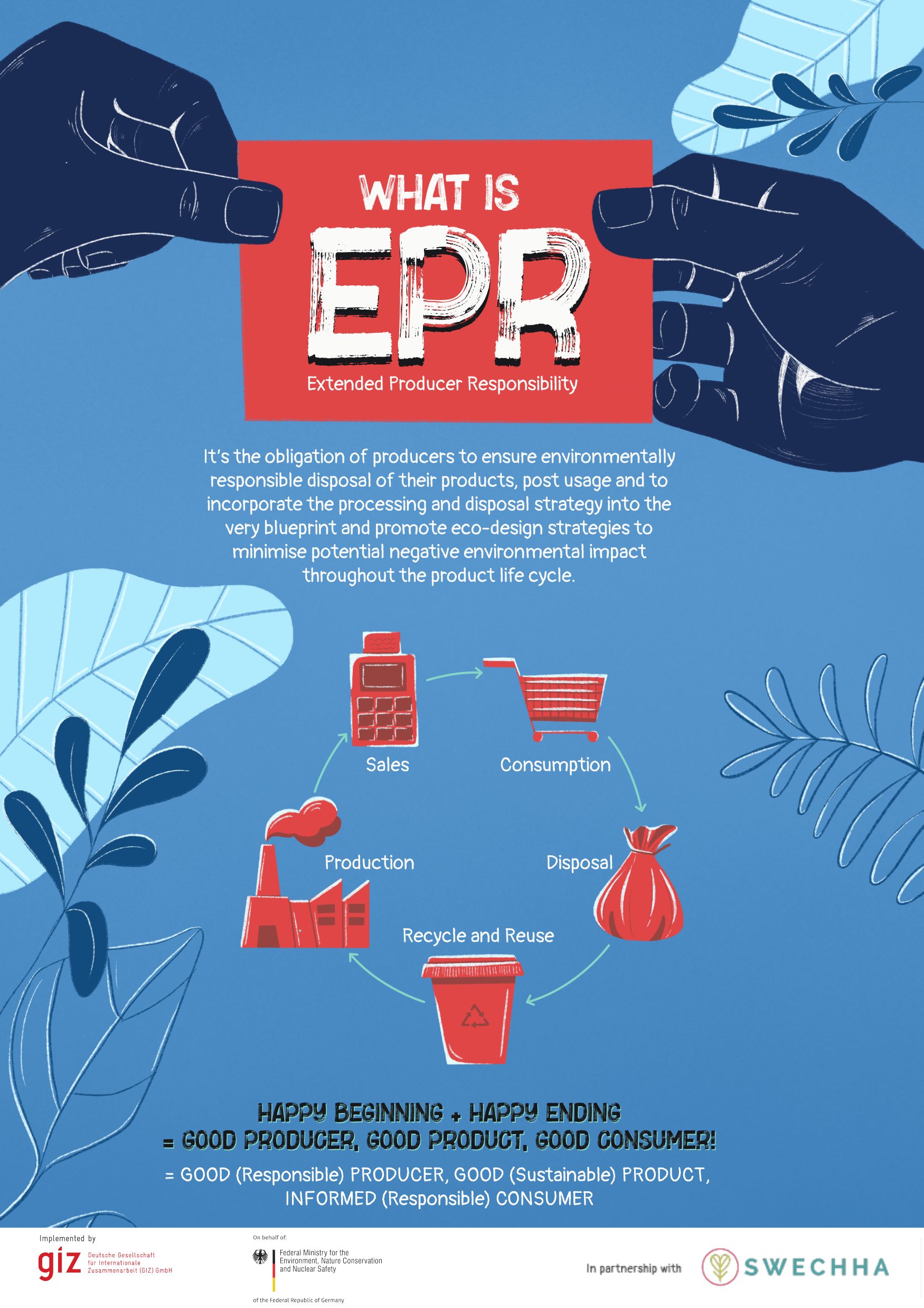
What is EPR?
The one sheet that does not address the shopper. Extended producer responsibility puts the obligation back on whoever made the thing.
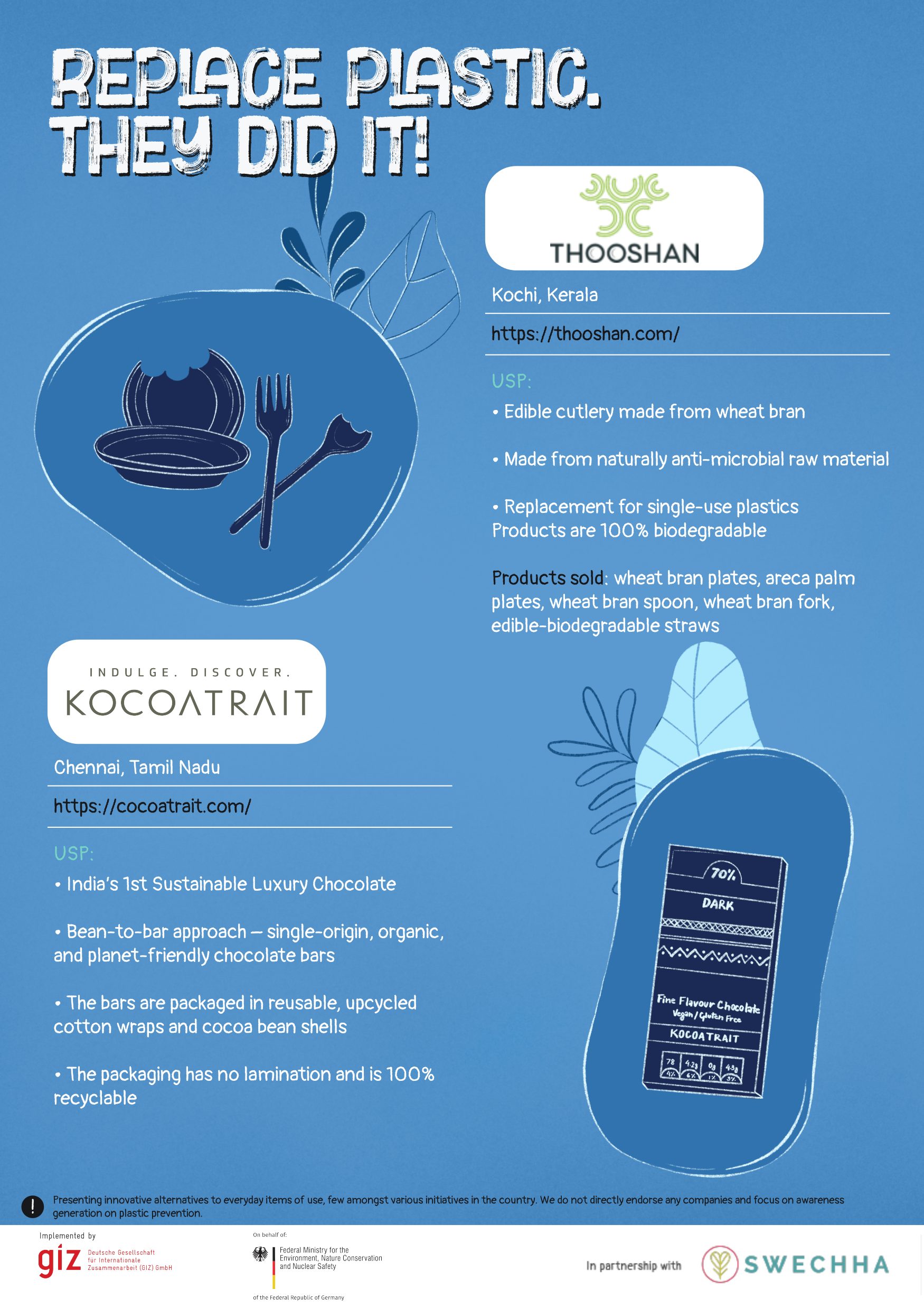
Replace Plastic. They Did It! (1 of 2)
Two Indian businesses selling everyday things without single-use plastic, with what they sell and how it is packed.
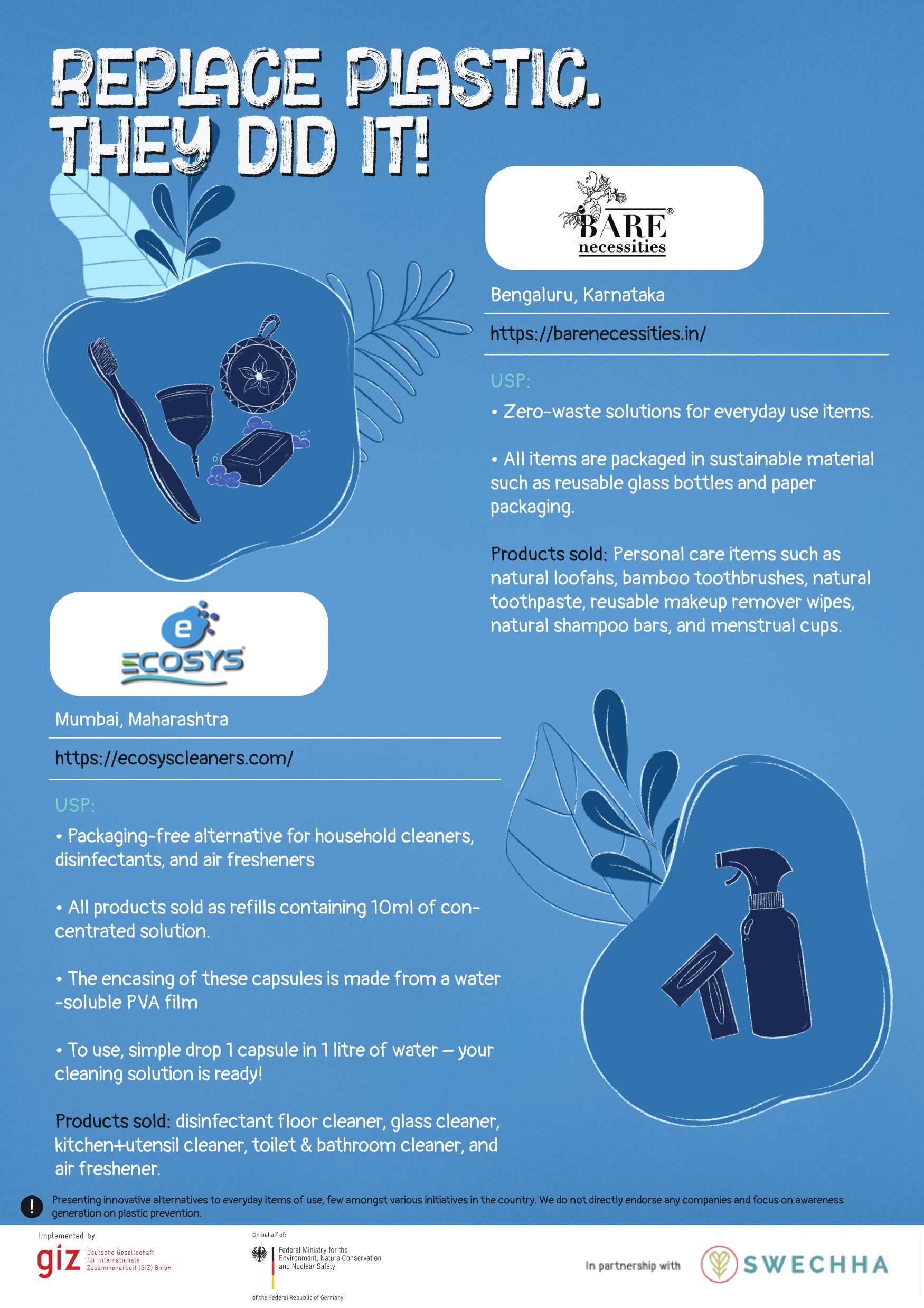
Replace Plastic. They Did It! (2 of 2)
Two more, on household goods and cleaning — the categories where single-use packaging is hardest to avoid.
The two sheets that name companies carry their own qualification, printed: “Presenting innovative alternatives to everyday items of use, few amongst various initiatives in the country. We do not directly endorse any companies and focus on awareness generation on plastic prevention.”
What it sets out to do
Say what single-use plastic actually is
The first sheet spends its whole surface on the definition and on how long each item lasts. “No plastic” is easy to agree with and hard to act on, and a demand nobody can apply is a slogan.
Name the replacement, not just the problem
Every item the set argues against is paired with something to use instead. Refusing is half a demand; the other half is what you carry.
Put the obligation on the producer too
One sheet is about extended producer responsibility — the duty of whoever made a thing to deal with it after use. The rest of the set asks the shopper. This one does not let the manufacturer out of it.
Strategy and activities
Print, not feed
The set is ten A3 sheets with trim and bleed, made to be printed and put up. It is designed for a reader standing in front of a wall rather than scrolling past.
Every claim sourced on the sheet itself
UNEP and IUCN on marine litter, the Ellen MacArthur Foundation on where all the plastic ever made went, CPCB on India’s daily waste, Environment International on microplastics in placenta. The sourcing is set in the artwork, not held in a file behind it.
The rest of how it runs
Show four who already did it
Two of the ten sheets profile Indian businesses selling everyday things without single-use plastic.
Who it is for
Whoever is about to buy one of ten things
The set is built around ordinary purchases — a bottle, a straw, a bag, a tea bag, a shampoo bottle, a sanitary pad. It is aimed at the moment before one of them is bought.
Producers
One sheet is addressed to whoever manufactures and sells, not to whoever uses. It is the only one that asks something of a company.
Whoever handles it afterwards
One sheet is about waste workers — more than forty lakh people in India by the figure it prints — and what arrives in their hands when waste is not separated.
Who was behind it
A German ministry and GIZ behind it
Implemented by GIZ on behalf of the Federal Ministry for the Environment, Nature Conservation and Nuclear Safety of the Federal Republic of Germany, in partnership with Swechha. That credit is printed on all ten sheets.
Who it is with
Partners by name.
- GIZ
- Federal Ministry for the Environment, Nature Conservation and Nuclear Safety, Germany
Get involved
Put the set up
Straight to a person
This goes to Vimlendu Jha, Swechha’s Executive Director.
Or write to vimlendu@swechha.in.
Fund this work
Straight to a person
This goes to Vimlendu Jha, Swechha’s Executive Director.
Or write to vimlendu@swechha.in.
The set was made to be printed and put up. If you have a wall, that is the ask.