
The method
One measurement,
one published limit
Every figure Swechha publishes as a reading is one measurement, held against one limit somebody else published, with the gap between them named. This is the rest of that rule — what gets done to a number here, what does not, and the words used when something is not settled.
What counts as a reading
A reading is a measurement of one thing, in one place, at one time, judged against a limit this organisation did not write.
-
01
One measurement, one limit, and the gap named
Not a score, not an index of our own, not a mood, not a colour. A reading that has been combined with another reading to make a third number is not a reading any more.
-
02
Where nobody publishes a limit, none is invented
One of the six subjects here has no legal threshold at all. It says so, and it stays unjudged. An organisation that supplies its own limit where the state has not is publishing an opinion with a decimal point on it.
-
03
The observation time, not the time we looked
Every reading carries the stamp its source gave the moment the air, the water or the imagery was actually observed. When a source is silent, the page says when it last spoke rather than showing something newer.
-
04
A missing reading is missing, never zero
A day with no observation is published as a day with no observation. Treating silence as a clean reading is the quickest way to turn a broken instrument into good news.
-
05
The worst monitor, named — with the average kept beside it
A limit written for a person's lungs is broken where that person is standing, not on average across a city, so Delhi's headline is the worst station of those reporting and its name is printed with it. The mean of every station is kept in the record, which is what makes the two comparable by anyone who thinks the other choice is better.
-
06
A revision keeps both numbers
Sources correct themselves. When one does, the record holds what was first published and what replaced it, with the times of each. A quietly-corrected archive cannot be checked against anything, including itself.
Six readings, six kinds of limit
No two of the six subjects on this site are held to the same kind of limit, and that is the finding rather than a coincidence.
- A ceiling
- A value that must not be exceeded. Delhi's air is judged against one.
- A floor
- A value that must not be fallen below. The Yamuna's dissolved oxygen is judged against one, and has to be read downwards.
- An absolute
- A fixed number that declares an event, whatever the local normal is.
- A requirement naming no quantity
- A law that demands approval rather than setting a number. Forest clearance works this way.
- None at all
- No statute publishes a threshold. The reading is given and left unjudged.
There is no total, and there never will be
Six units do not average. An index, milligrams per litre, degrees, square kilometres, hectares, days — there is no exchange rate between them, and no two of the six even share a kind of limit. A single figure for the environment decides something on the reader's behalf without saying what it decided.
Over the limit is not the same as unsafe
A published limit is what a government committed to, and the two are not the same thing. Under a limit is not a clean bill of health, and a limit that has been broken says the commitment failed, not that a particular person was harmed.
The words, and what each one costs
Four small closed vocabularies do most of the work on this site. Each one exists because a vaguer word would have let a claim get stronger than its evidence.
How the source delivers
Stamped on every reading. It describes the SOURCE's cadence and never how fresh this page is.
- Live
- the value can change between one reading and the next
- Periodic
- delivered on a cadence — a yearly table, a monthly sample
- Out of season
- the window is shut; the record still stands
- Demo data
- a specimen, and there are none in the published set
How a number was arrived at
On every figure this organisation publishes about its own work, and on every reading. A modelled national estimate presented as a measurement is the commonest way an honest number becomes a false claim.
- Counted
- somebody counted them
- Measured
- an instrument read it
- Modelled
- it was derived by arithmetic from things that were counted or measured
How settled a figure is, while an event is still moving
On the pages for one-off events, where the numbers move for days and the earliest ones are usually wrong.
- Preliminary
- the first figure anyone published
- Media report
- reported by outlets, not yet by an authority
- Official estimate
- an authority has published a figure
- Confirmed
- counted, and not expected to move
How settled a cause is
Almost never the strongest word. A cause named too early is the hardest thing on a page to withdraw later.
- Confirmed
- established by an investigation that has reported
- Likely
- the weight of expert comment, stated as that
- Under investigation
- somebody official is looking
- Not established
- nobody knows yet, and the page says so
Climate change is not on the cause list
Attributing one flood or one heatwave to climate change is a research programme, not a section of a web page. Where the larger signal belongs is with the CLASS of event — how often this kind of thing now happens — and that is where this site puts it.
What this site will not do
Each of these was a real temptation, and each one is refused everywhere rather than case by case.
- Add up readings that do not share a unit.
- Invent a limit where no authority publishes one.
- Show a card with a dash in it. A card exists when a number exists.
- Put a figure in its own voice. Every number names the body that published it.
- Attribute a single event to climate change.
- Round, reinterpret or quietly restate a source's figure.
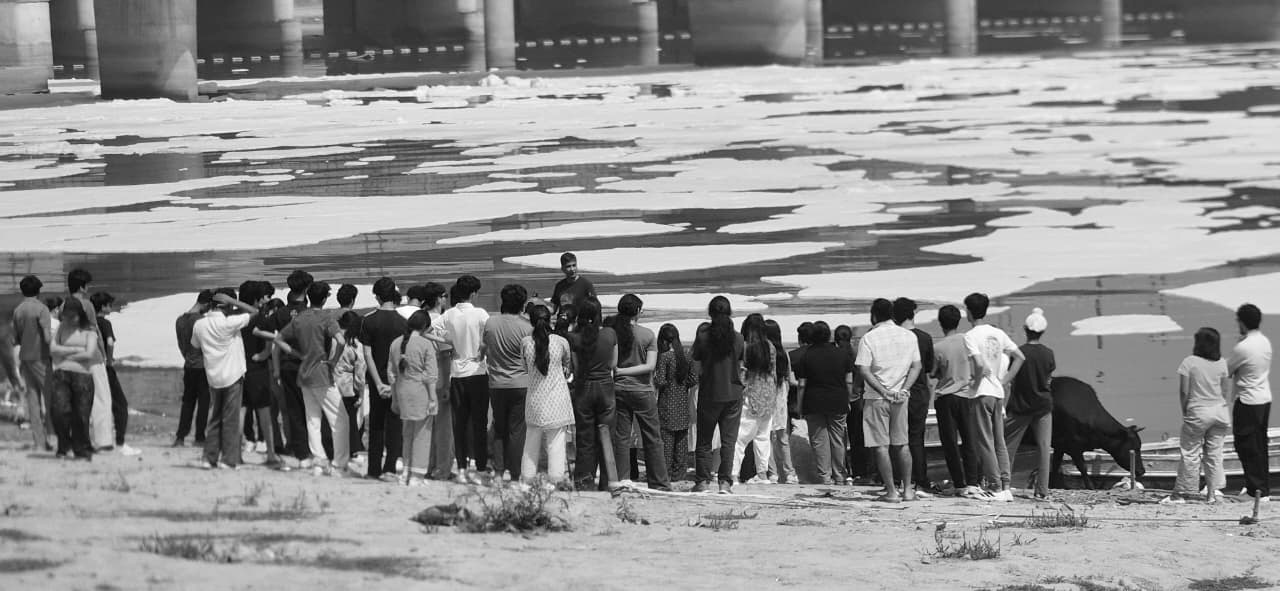
- Use a photograph of somewhere else. The imagery is on the page, or the reason there is none is on the page.
- Colour a photograph. Every image on this site is black and white, because colour would make the foam on a river look chosen.
- Publish a total for its own impact. Reach is what an organisation can claim; effect is what it can be held to, and both are labelled.
Where the rules are applied
None of this is abstract. Every rule above is visible on a page.